Figure 1 shows optical rotors for 3, 4, and 5 wings. Such rotors can be fabricated by micromachining such as dry etching, wet etching (photolithography), and micro-photoforming . In the figure, photographs of the SU-8 photoresist rotors of 20 mm diameter fabricated by photolithography are shown. The fabrication conditions of photolithography are listed in Table 1.
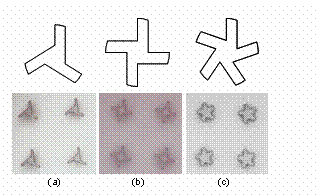
Fig. 1. Variation of the shuttlecock wing number for considering the stability,
rotation rate and agitation in the medium
Figure 2 shows the photolithography process. Not only the exposure and development conditions but also the baking methods and conditions are important, particularly for achieving the correct rotor shape and avoiding adhesion between rotors. To fabricate the correct shape, parallelism between the resist and the mask is important. We used a hotplate instead of an oven to prevent resist deformation during prebakeing and postbaking. We adjusted the baking temperature of 140°C to polymerize the resist firmly.
Table 1. Fabrication
conditions of photolithography
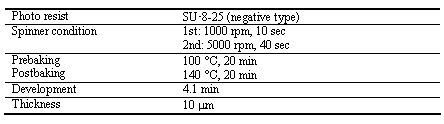
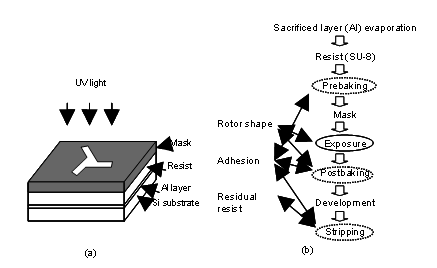
Fig. 2. Optical rotor fabrication by
photolithography